
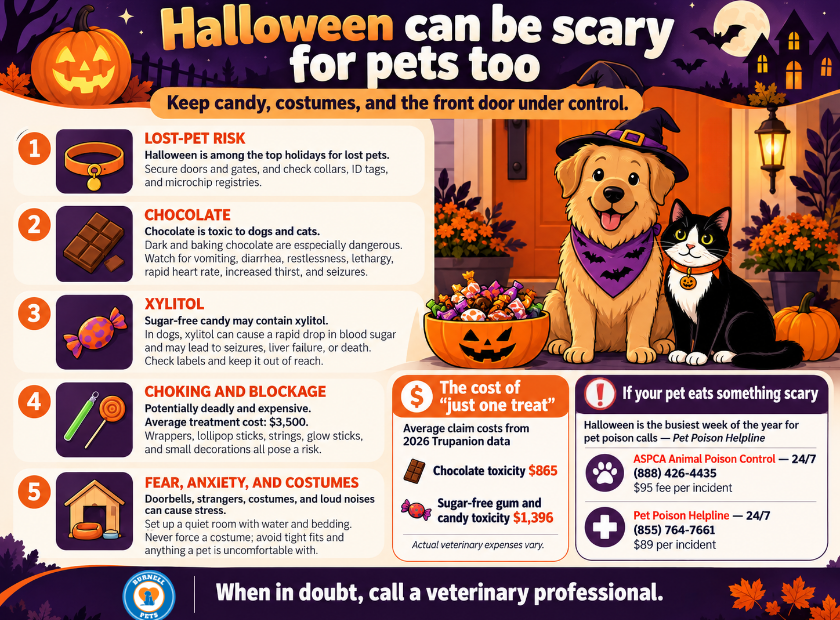
Halloween is a fun time for families, but some of the holiday’s most familiar traditions can put our pets at serious risk.
A dog finds a bag of chocolate. A cat swallows a piece of ribbon. A frightened pet slips through the door while trick-or-treaters arrive. These everyday situations can quickly turn into veterinary emergencies.
Even more concerning, pets don’t always show symptoms immediately after eating something dangerous. By the time an owner realizes something is wrong, the situation may already be serious.
The good news? Many Halloween pet emergencies are preventable. Understanding the risks and taking a few simple precautions can make a big difference. The following Halloween pet safety tips guide you to making sure your pets are safe.
Why Halloween Pet Safety Matters
Accidental poisoning is a significant concern for pet owners, and recent veterinary insurance data illustrates just how serious the problem can be.
According to Trupanion’s March 2026 report, poisoning-related claims among its insured dogs increased 30% between 2020 and 2025. Claims involving insured cats increased 50% over the same period.
Although these statistics aren’t exclusive to Halloween, they highlight how easily pets can encounter dangerous substances.
During Halloween, the combination of candy, decorations, visitors, and unfamiliar activities creates additional opportunities for accidents.
Halloween Candy: More Dangerous Than You Think
Chocolate Poisoning
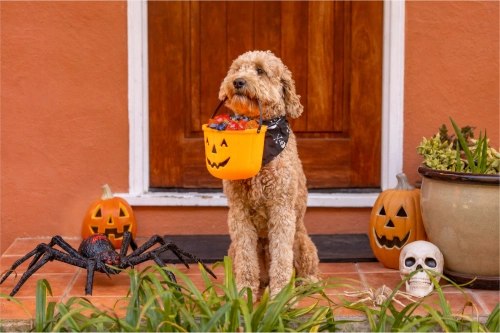
Chocolate contains theobromine and caffeine, substances that dogs and cats cannot metabolize as efficiently as humans.
Dark chocolate, baking chocolate, and cocoa powder are particularly dangerous because they contain higher concentrations of these compounds. However, even milk chocolate can cause poisoning, especially in smaller dogs.
Symptoms may include vomiting, diarrhea, restlessness, increased heart rate, tremors, and seizures.
The severity depends on the type and amount of chocolate consumed and the animal’s weight.
Never assume that a small amount is harmless. Contact your veterinarian or an animal poison control service like the Pet Poison Helpline or ASPCA Poison Control if your pet eats chocolate, even if symptoms haven’t appeared.
Xylitol: A Hidden Threat in Sugar-Free Treats
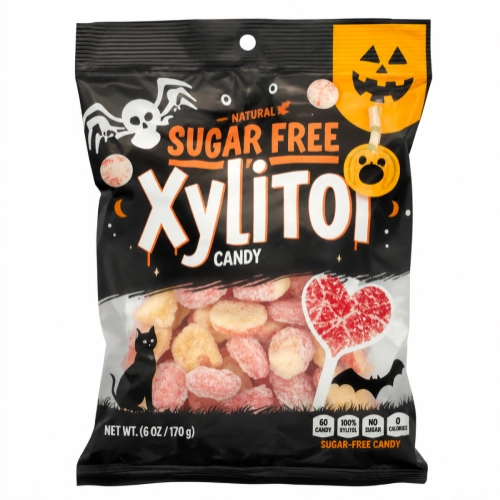
Xylitol, sometimes called birch sugar, is a sweetener found in certain sugar-free candies, gums, and other products.
While safe for humans, xylitol is extremely toxic to dogs. It can cause a rapid drop in blood sugar, potentially leading to weakness, collapse, seizures, and liver damage.
According to Pet Poison Helpline, even a single piece of xylitol-containing gum can be dangerous to a small dog, depending on its xylitol content.
If you suspect your dog consumed xylitol, seek veterinary guidance immediately. Do not wait for symptoms.
Raisins and Other Treats
Raisins and grapes can cause severe kidney injury in dogs, and there is no reliably established safe amount.
Even candy without chocolate or xylitol can cause gastrointestinal problems if eaten in large quantities.
The safest rule is simple: Halloween treats are for people, not pets.
Candy Wrappers and Decorations: The Risk of Intestinal Blockages
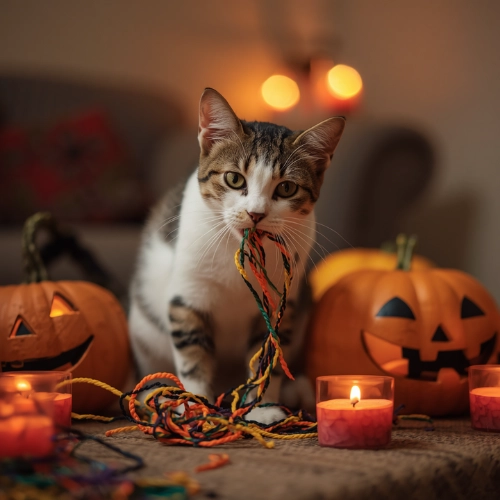
Sometimes the danger isn’t the candy itself but what surrounds it.
Dogs may swallow candy wrappers along with their treats, while cats may chew or swallow string, ribbons, and decorative materials.
These objects can become lodged in the digestive tract, causing a potentially life-threatening intestinal obstruction. Some cases require emergency surgery.
Warning signs include repeated vomiting, abdominal discomfort, loss of appetite, and lethargy.
String and ribbon are especially dangerous for cats because they can cause the intestines to bunch together, potentially resulting in serious internal injuries.
Glow sticks can also cause problems. Their contents typically cause irritation and excessive drooling rather than severe poisoning, but broken plastic presents an additional injury or ingestion risk.
Keep small decorations, wrappers, ribbons, and glow sticks safely out of reach.
Costumes, Stress, and Escaping Pets
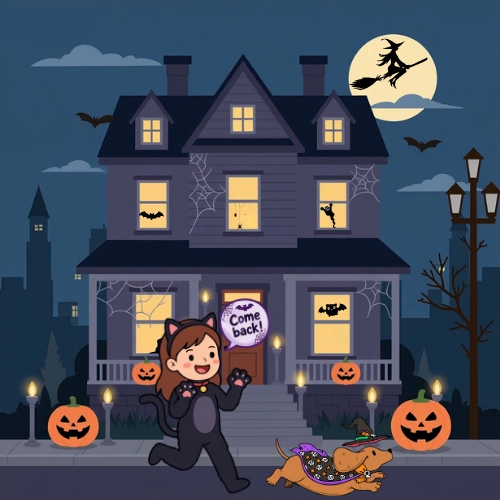
These next Halloween pet safety tips show that Halloween isn’t just about candy. Costumes, unfamiliar visitors, and frequent doorbell ringing can be stressful for dogs and cats.
Some pets enjoy dressing up, but others find costumes uncomfortable or frightening. Poorly fitted costumes can restrict movement, interfere with breathing, or contain small accessories that may be swallowed.
Never force a pet to wear a costume, and always supervise animals that are dressed up.
Trick-or-treating presents another concern: escape.
With doors opening repeatedly, a frightened or curious animal may slip outside unnoticed.
Before Halloween activities begin, consider giving pets a quiet, comfortable room away from visitors. Make sure identification tags and microchip information are current.
For decorations, choose flameless candles when possible, secure electrical cords, and keep batteries inaccessible to pets.
Halloween Pet Emergencies Can Be Expensive
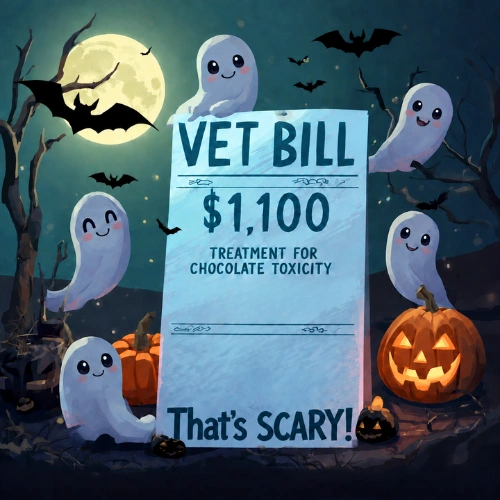
Beyond the emotional stress, accidental poisoning and foreign-body ingestion can result in substantial veterinary expenses.
According to Trupanion’s March 2026 report, the average U.S. cost of treating chocolate poisoning among its insured pets was $865.
Other insurance data suggests costs can be even higher. Pumpkin Pet Insurance reported an average chocolate-related veterinary bill of approximately $1,100 for dogs in its own claims analysis.
These figures come from different insured populations and methodologies, so they aren’t directly comparable. However, both illustrate how expensive a seemingly minor accident can become.
Treatment may involve emergency examinations, bloodwork, medication, hospitalization, or surgery, depending on the situation.
Prevention is always preferable, but if an emergency occurs, don’t delay contacting a veterinarian because of concerns about cost. Early intervention can be critical. Just as critical as prevention is knowing exactly where the closest emergency veterinary hospital is to your location in case of an emergency.
What to Do if Your Pet Eats Something Dangerous
If you suspect your pet has swallowed a toxic substance or foreign object, take the situation seriously, even if the animal appears normal.
Remove access to the substance or object and gather any available packaging or ingredient information.
Try to determine what was consumed, approximately how much, and when it happened.
Contact your veterinarian, an emergency veterinary hospital, or an animal poison control service immediately.
Never induce vomiting or give home remedies unless specifically instructed by a veterinary professional.
Save these emergency contacts:
Pet Poison Helpline: 855-764-7661
ASPCA Animal Poison Control Center: 888-426-4435
Both provide 24-hour poison consultation services. Fees apply. Have a credit card available when placing your call.
A Simple Halloween Pet Safety Tips Checklist
Before the trick-or-treaters arrive, take a few minutes to prepare your home:
- Keep chocolate, candy, gum, and raisins securely out of reach.
- Check sugar-free products for xylitol or birch sugar.
- Remove accessible candy wrappers, ribbons, string, and small decorations.
- Use flameless candles and keep electrical cords and batteries secure.
- Avoid costumes that restrict movement or cause stress.
- Give pets a quiet, secure space away from the front door.
- Check identification tags and microchip contact information.
- Save emergency veterinary and poison control contact numbers.
After Halloween, check floors, furniture, bags, and outdoor areas for dropped candy or wrappers.
A Safer Halloween Starts With Awareness
Halloween should be fun, but our pets depend on us to recognize dangers they don’t understand.
A little preparation, careful supervision, and knowing when to seek veterinary help can prevent an avoidable emergency.
Know how to recognize signs of illness or distress in your pet. Consider taking a pet first aid and CPR course, or refreshing your existing training, to help you respond confidently and effectively in an emergency.
At Burnell Pets, we believe that sharing reliable information — such as these Halloween pet safety tips — is an important part of protecting the animals we love.
Together, we can help make Halloween safer for dogs and cats everywhere.
This article is for educational purposes and is not a substitute for veterinary advice. Always consult a veterinary professional regarding suspected poisoning, ingestion, or other medical emergencies.